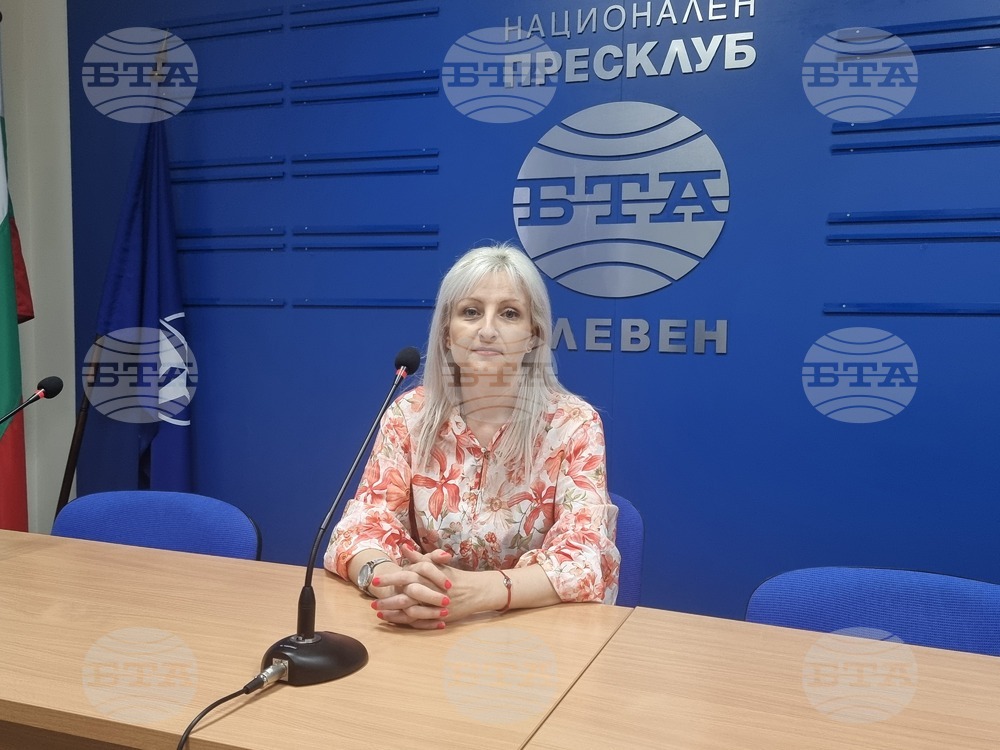
On July 17, 2024, at the National Press Club of BTA — Pleven, 21 Dimitar Konstantinov Street, in connection with the sustainability policy and on the basis of the prepared Joint Strategy for the Protection, Conservation, Preservation, Sustainable Use and Management of Cultural Heritage with a Common History under the project “Danube – a River with a lot of Common History”, project code ROBG-476 under the INTEREG VA Romania-Bulgaria Program, co-financed by the ERDF, the “Open Hand” Foundation gave a press conference to present the benefits of the implementation of the project as part of the cohesion policy and the role of the political priorities of the European Union in the Balkans.
With the implementation of the project “Danube – a River with a lot of Common History”, the primary focus is on preserving the cultural and historical heritage of Bulgaria and Romania in the cross-border area and promoting cultural exchange and understanding. The project contributes to the preservation and restoration of historical and cultural sites as a heritage for future generations. At the same time, it has educational value through the realized exhibitions of the models.
“Part of the benefits are also the promotion of economic development in the cross-border region. Cultural tourism, stimulated by such projects, increases the influx of tourists, which leads to growth for the local economy. The inclusion of such routes and attractions leads to the creation of new jobs and business opportunities in the region,” commented Ralitsa Taslakova, project coordinator.
“The project seeks to theorize and visualize the relations between the two countries – from the south and north of the Danube, considering the river as an element of synthesis, a unifier, not a dividing line and looking for precisely those moments that are evidence of this common, not only historical, but also complex development of the Lower Danube.” This was said by the director of the Regional History Museum in Pleven, Dr. Volodya Popov, who participated in the development of the Strategy for the Protection, Conservation, Preservation and Sustainable Use and Management of Cultural Heritage in the Cross-border Region.
According to him, the work done by experts in Bulgaria and Romania is extremely useful because “we have both theoretical and visual evidence for the state of the Lower Danube on both sides in the 18th-19th and early 20th centuries. In addition, this information can be a level and stage in further developments”.
“The preservation of cultural heritage leads to an improvement in the quality of life in the community, promotes economic development, strengthens cultural identity and international and cross-border cooperation between regions, in this case between Bulgaria and Romania”, summarized Ralitsa Taslakova.